Wednesday, 13 February 2019

What We Ate Wednesday--Mason Jar Soup

Hello lovelies! It's winter. It's cold. I have had lots of work in the shop where unless it is absolutely below freezing we leave the door open. Lunch needs to be something quick and easy to make. In summer I have a big salad, but in winter it needs to be something hot to eat. I only have access to a kettle.

It's like an episode of Ready, Steady, Cook crossed with MacGyver.

You've got a handful of random ingredients, a mason jar and a kettle....your time starts NOW! I'm either making lunch or defusing a bomb.

I like to carry it in the mason jar and then put in a bowl for eating. Is it the best soup I've ever had? No. Is it quick and easy and filling? Yes. All you need to add is boiling water.  I could probably prep several jar on the go just to grab to take to work, but I only do one at at a time. This is mainly because I have only two mason jars (one to wash and one to use) and a British sized fridge, which is to say SMALL.  If I put a week's worth of jars in my fridge, there would be no room for anything else.

I make my soup with noodles, peas, carrots and mushrooms with some tamari/soy sauce and vegetable stock powder.

I buy these brown rice vermicelli noodle nests. I use half a noodle nest for every meal. If wheat is not an issue, ramen noodles (sans the spice packet) would be ideal. I do most of my prep the night before, but add the mushrooms in the morning as it stops them going brown. I matchstick a whole carrot and store it in a jar covered in water and just pull out what I need each night when I do prep to save time

Some recipes I saw used uncooked vegetables and noodles and let the boiling water on the day of eating do the cooking. I found it meant my soup got cold, so I pre-cook everything but the mushrooms so I can eat it hot.  I also prefer to add my broth powder right before I add the boiling water and not in the jar. I find if I put it in the jar it clumps. Nobody wants clumpy soup. So I carry a small tub of broth powder (I use my homemade stock powder, but you could use something like Marigold.)

Mason Jar Soup
The night before:
1/4 cup frozen peas
1/4 cup carrot cut into thin matchsticks
half a noodle nest

Put ingredients into a pot and cover with boiling water for as long as the noodles need to cook. Mine take four minutes. Then drain and run under cold water. Add to jar. Add 1 TB tamari/soy sauce. Put the jar in your fridge.

In the morning add:
1 sliced mushroom

Take it to work. When you are ready to eat, add the contents of your jar to a bowl with 2 tsp instant broth powder and fill up with boiling water. Then eat. 

Easy as that. You could probably get creative and add all sorts of stuff, but this is the tried and true one I have been doing. If I come up with a new version, I will report back. 


Wednesday, 6 February 2019

What We Ate Wednesday--Pearl Barley and "Chorizo" Soup

Hello lovelies! Inspiration for mealtimes can come from the most unlikely places. When i see something that sparks my fancy I become obsessed (Obsessed, I tell you!) until we have eaten it.

I picked up the January copy of that free magazine that Tesco gives out because they have started including vegan recipes and I like to see how many times the word vegan is mentioned. Quite a lot, as it happens. Their vegan line of food Wicked Kitchen is expanding every month. Anyway, I saw this recipe (which was NOT one of the vegan ones) and the picture looked so delicious I could not stop thinking about it. Literally. I carried the picture around with me and mooned over it until I could work out how to veganise it.

The most obvious choice was to just substitute some vegan chorizo sausage for the meat one because that was literally the only thing that wasn't vegan. Linda McCartney makes a vegan and gluten free chorizo sausage, but we ate it once and felt it was overpriced and not all that great. Plus it is highly processed and over packaged. I knew I could make it better.

I started researching chorizo spices and found this recipe on YUP IT'S VEGAN and decided to copy the spices. Then I decided to add mushrooms for a meaty bite.

The result was amazing. Delicious, spicy, savoury goodness in a bowl or rather 8 bowls as it made a tonne of soup. Enough to feed Coxey's Army as my dear old history-teaching mum always says. I think it would freeze really well. All you'd need to do is just freeze the soup and add in the greens fresh when you heat it up. Make sense?

A note to those people who are more gluten sensitive than me. I am lucky in that it only seems to be wheat that affects me and gives me the "I've swallowed a basketball" look. I can still tolerate lower gluten grains like barley. If you cannot then swap the barley for brown rice and you can still enjoy this wonderful soup.

Pearl Barley and "Chorizo" Soup


First make your spice mix:

1 tsp red pepper flakes
1/2 tsp. chilli powder (I used a Mexican spice blend) 
2 tsp dried thyme
2 TB dried oregano
1/2 tsp ground allspice
1/4 tsp ground cloves
2 TB smoked paprika
1.5 tsp ground black pepper 
1 tsp ground coriander
1.5 TB ground cumin
1/2 tsp ground cinnamon
You will have some left. I have been sprinkling it on roast potatoes which has been delicious.

The soup:
2 onions, diced small
2 carrots, diced small
6 button mushrooms, roughly chopped
3 TB chorizo spice mix (see above)
3/4 cup pearl barley or brown rice
2 400g tins of chopped tomatoes
6 cups hot vegetable stock
2 TB tamari or soy sauce
1 tsp yeast extract (optional) We use Tesco brand Marmite
1-2 TB red wine vinegar
200g kale, de-stemmed and torn into tiny bits

1. In your biggest pot, cook the onion and carrot in a splash of oil or water until softened.  
2. Add the mushrooms and the spices and stir to coat. Add the tamari/soy sauce and yeast extract if using.
3. Add the barley or rice if gluten free, the tomatoes and the hot vegetables stock. Bring to the boil, then reduce heat and simmer for 25-30 mins until your barley or rice is done.
4. Add the vinegar (add 1 TB, taste and see if you want more tang then add the other TB) and the greens and cook until the greens are wilted and reduced. Taste for salt. I didn't think it needed any as there so many spices.
Serve and eat!

This was delicious...like a hug in a bowl. There was a complex smoky flavour from the spice mix with a little tang from the vinegar. Thank you chef Jamie Oliver for this recipe in Tesco magazine.

Friday, 1 February 2019

Fairy Tale Friday--Like Good Salt (Italy, 1875)


 Hello and welcome to Fairy Tale Friday. Are you sitting comfortably? Good. Then I’ll begin.

For the last two weeks we have looked at tales that possess qualities of both Aarne-Thompson-Uther 510a—persecuted heroine—and ATU 510b where a heroine runs away and disguises herself and works in a lowly place until spotted by the prince as well as an overlap into ATU 923—love like salt.

As I said last week, not all ATU 923 tales are Cinderella tales. If the story is just about a banished daughter, and a reunion where the father learns the lesson without any disguises, meeting a prince, lost objects and a wedding then it is not an ATU 510 Cinderella story.

SUR LA LUNE has this to say about it:

When a magic helper as well as an identifying object appear in the tale, it is classified as ATU 510B. A lack of those elements usually makes it a straightforward ATU 923 tale.

I found a wealth of ATU 923 tales and considered for a moment diverting into a study of them, but keeping the above guidelines in mind, many were just love like salt variations with no overlap into persecuted heroine. I found only one more that fit both categories and we will look at it below. But if you are interested in love like salt versions, please go {HERE}  and have a look.

Our story today entitled Come ‘L Bon Sale (Like Good Salt) was collected by Domenico Giuseppe Bernoni  and was printed in Fiabe Popolari Veneziane (Venetian Popular Tales) and was featured in The Cornhill Magazine in July of 1875. According to Pitt.edu:

This collection has been made con amore by a native Venetian gentleman named Bernoni, who took them down verbatim, as they were told by the comari (old wives, gossips) of Castello or Canaregio.

This is unusual version as it features elements of Snow White. In other ATU 923 versions her father banishes her for likening her love to salt, but in this one he orders her to be taken out and killed and her eyes and heart brought back. The faithful servant is hesitant to perform such a loathsome task but sees a small dog in the meadow and kills it instead, sparing the girl’s life.

As in other ATU 510 persecuted heroine stories, there is a magical helper. In this case a fairy gives the girl a magic wand that when she puts in her bosom turns her into an old lady. As in last week’s tale, an ugly woman is more likely to find work than a young pretty one. She is given the job of hen wife looking after the poultry and is forced to sleep in an outhouse. I am not sure if this is just an outbuilding or an actual toilet, but either way the prince overhears her crying and drills a hole in the outhouse to see why she’s upset (that’s not creepy…) and realised that she is not an ugly, old lady but a beautiful young girl. He begs to marry her since he has seen through her loathsome disguise. 

It then circles back round to ATU 923 with the father attending the wedding, eating the unsalted food and wishing he had in his daughter back. In other versions where she was merely banished this is a glorious reunion, but he is regretting having MURDERED her. If it were me, I would be far less forgiving, but our heroine is kinder and more gracious than I as she says, "You must do nothing of the sort. Let bygones be bygones; you will always be my own daddy, and now let us think of nothing but making merry.” I was a child who felt injustices deeply. I can guarantee that if I had read this when I was younger, I would have been spitting nails. “He tried to KILL you! How can you forgive him so easily?”
Nonetheless, it is an interesting addition to our Cinderella stories.

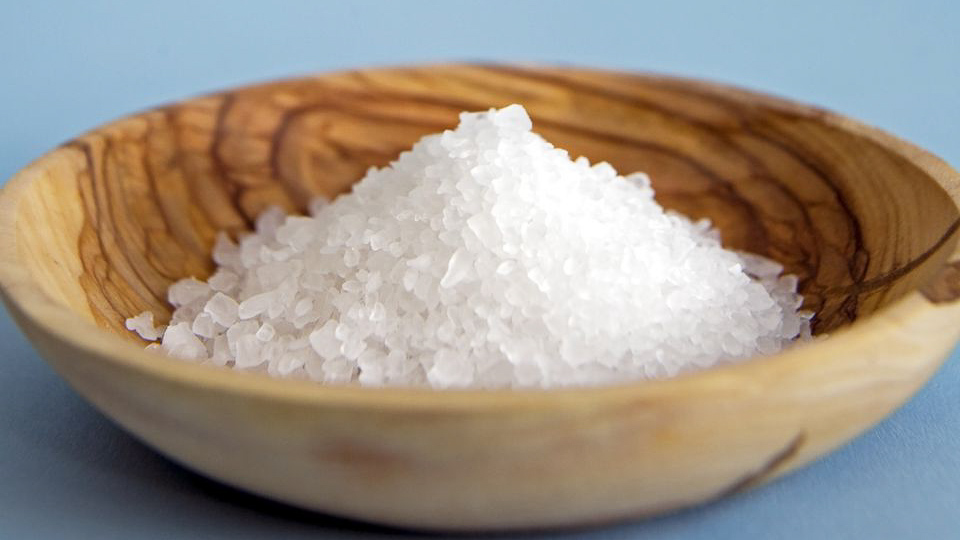
Image result for salt
Like Good Salt

Once upon a time there was a king, and this king had three daughters. One fine day he took it into his head to call these three daughters, and to ask them, one after another, if they loved him.

He calls the eldest, and he says, "Hark ye, do you love me?"

Says she, "Yes, daddy, I do."
"
And how much?"

"As much as good bread."

The king thinks and thinks, and then he says, "Yes; when you're hungry bread is a good thing."

Then he calls the middle daughter, and he says to her, "Hark ye, do you love me?"

"Yes, daddy, I do."

"And how much?"

"As much as good wine."

Well, the king thinks and thinks, and then he says, "Yes, yes; wine puts life into a man, therefore it is a good thing."

Then he calls the youngest daughter, and he says, "Hark ye, and do you love me too?"

"Yes, daddy, I do."

"And how much?"

"As much as good salt."

And the king said, "As much as good salt!" And he began to think and think, and, because salt by itself tastes bad, this answer of the youngest daughter did not please him."

The king, having satisfied himself by reflection that to be loved as much as good salt is equivalent to not being loved at all, calls his most faithful servant, and orders him to conduct the youngest princess into some desert place, there to kill her, and to bring back her eyes and her heart in proof of the accomplishment of the deed. The faithful servant receives this remarkable order with the utmost calmness, merely replying, "It shall all be done."

The princess is conducted into a great meadow, and there informed that her father's commands are that she shall be killed, and her eyes and heart carried back to the palace. Whilst she is begging for her life, she perceives a little dog, and exclaims that heaven has sent it to assist her escape. She persuades the faithful servant to kill the dog and carry back its eyes and heart instead of her own.

He consents; and she is left alone in the great meadow, very much at a loss what to do, and crying bitterly. In the midst of her grief and perplexity she meets with an old woman -- a fairy of course -- who gives her a little wand. When she puts the wand into her bosom her form will change to that of an old woman. She is then to proceed in a certain direction until she finds a palace. In this palace, as the fairy happens to know, they are in want of a woman to look after the poultry. The princess is told to ring the bell of the palace and offer herself for the place in her assumed form of an old woman.

All which falls out according to the fairy's directions, and the princess is received as hen-woman into the king's service. There not being room for her to sleep in the palace, she is put to lodge in an outhouse hard by.

One evening, the queen's son, happening to pass that way, hears the old hen-woman in her chamber sobbing and lamenting in a very piteous manner. He waits until she comes out and asks her the cause of her grief. Is she discontented with her master and mistress?

No; on the contrary, the hen-woman is most thankful to them, but she is crying over some private misfortunes of her own. But the next evening the young king goes near the outhouse again and hears the same lamentations. His curiosity is excited. He makes a hole in the wall with a gimlet, and, peeping through it, he beholds no old hen-woman, but a beautiful young lady; for the princess resumes her proper form in her own chamber every night by the simple process of putting down the fairy's little wand which she carries in her bosom all day.

The young king went directly to his mother, and said to her, "Mother, mother, it's no old woman that minds our hens, but the most beautiful girl that eyes ever saw. Come quickly and look, for I have made a hole in the wall, and you can peep through."

With that the queen up and went, and looked through the hole, and saw a beautiful girl, crying bitterly.

Said the queen, "Well, you're right; she is a most beautiful young woman."

The son said, "Mother, I'll have her for my wife."

"Very well, we'll go and ask her."

They waited until the hen-woman came out, and then the queen said to her, "Why are you always crying so, goody? But, indeed, you're not goody, but a beautiful young girl, and I won't have you stay there any longer."

"And if you're content," said the king, "I'll have you for my wife."

"Oh, your majesty," said she; "that's not for the like of me!"

"No matter for that," said the queen. "Come along with us now, and in a fortnight's time you shall be my son's wife."

This arrangement is acceded to by the disguised princess. But she requests as a favour that on the day of her wedding the bridegroom shall invite all the other kings to a banquet; and that, moreover, all the dishes set before one special king, whom she will indicate, shall be dressed entirely without salt, and that the said king shall be seated next to her.

The wedding day came. All the kings who had been invited were there, and among them the king whose dinner was to be served without salt, and he sat next the bride. When the dinner was served, this king began to sup his broth, and found that there was no salt in it, and he gave a great sigh. He looked at the bride who sat beside him, and he kept looking and looking, because she was so exactly like his daughter.

Said she to him, "What's the matter, your royal majesty, that you sigh, and don't eat?"

He gave another sigh, and looked at her, but said nothing. They brought one dish after another, but he only just tasted them, and then left them, because they were all without salt.

The bride began again saying to him, "But whatever is the matter that you keep on sighing so, and eat nothing?"

"I sigh because of something that comes into my head."

"Oh, but eat now, and don't think of anything else!"

Then the king could not hold his peace any longer. The remorse he felt -- the dinner without salt -- the bride who was so like his daughter -- all made his heart so full, that it was ready to burst, and he was obliged to speak.

"If you only knew," said he, "what I have done! One fine morning I took it into my head to call all my daughters and ask them if they loved me. The youngest one said, yes, she did as much as good salt. At the moment it seemed to me that salt was not a good thing; but now I know how good it is, and that we cannot do without it. But at the moment, in a fit of rage, I called my servant, and ordered him to take away my daughter into some desert place, and to kill her, and to bring back her eyes and her heart. And he did it. He took her away, and killed her, and brought me back her eyes and her heart. And when I look at you, I seem to see my daughter, you are so like her."

"Have you that servant still?" said she.

"Yes; I have him still. But it was none of his fault, you know. He only did what I bade him."

"And if I were to say to you that I am your daughter, would you believe me? And that the servant, instead of killing me, killed a little dog, and that, instead of taking out my eyes and my heart, he took out the little dog's, and that he left me to my fate?"

Then the king, when he heard all this, was ready to faint. He was just going to fall down on his knees, and ask his daughter's pardon; but she said, "You must do nothing of the sort. Let bygones be bygones; you will always be my own daddy, and now let us think of nothing but making merry. Only I should like that everything belonging to me at home should be given to that servant, because it was he who saved my life."

The king was so delighted at finding his daughter again, whom he thought was dead, and at being present at her wedding, that he ordered eight days' more feasting at his own expense, and invited all the kings of his acquaintance, and the faithful servant too, and they had a great merry-making, and lived happy ever after.

That’s all for this week. Stay tuned next week for a tale from Norway and a wooden cloak.

Wednesday, 30 January 2019

What We Ate Wednesday- Coconut Curried Cowboy Beans and Peshwari Naan Bread

Hello lovelies! This is just something I invented one day when I couldn't think of what to cook and got the idea to use a tin of cowboy beans (that's baked beans for the uninitiated) and making them fancier.

This probably only works with British baked beans as they come in a tin with a thin, flavourless red sauce. I am sure many British people will disagree with me, but you never grew up eating proper baked beans which are rich and smoky and full of molasses. If you want to see how to turn a tin of UK baked beans into US beans then go HERE to see how I pimp by beanz.

So, anyway I got the idea to turn a tin of cowboy beans into a curry by looking at recipes online. Most called for a tin of beans and a tin of tomatoes. Well, I thought--cowboys beans have both beans and tomato sauce in one container. Boom!

So I just started throwing some ingredients in and tasting until it tasted good. But what to serve with it? I decided to use my foolproof 5 minute flatbread and make it Peshwari style which means sweet.

Some people might recoil in horror, but I think they came out quite nice. Next time I think I will add some frozen chopped mango or a few spoons of mango chutney as I thought it could have used a little sweetness. It was also a chance to use these cute little tins of coconut milk I can buy at B&M Bargains 4 for £1.


Coconut Curried Cowboy Beans  
1 onion, finely diced
1 tin baked beans (we used Tesco reduced sugar and salt)
4 cloves garlic, crushed
165 ml coconut milk (about 3/4 cup?)
1 tsp cumin seeds
2 tsp garam masala + 1 tsp turmeric (or 3 tsp curry powder)
1/2 tsp chilli flake
2 TB tomato puree
1-2 TB liquid sweetener if it doesn't seem sweet enough) 
1 cup frozen peas
Optional:  a few spoons mango chutney or some frozen mango chunks

1. Cook your onion in a splash of oil until softened. Add the spices and garlic and cook until fragrant.
2. Add the baked beans and the coconut milk and tomato puree and then simmer while you make your bread. When the bread goes into the oven, add your frozen peas.
3. Taste at the end and add the liquid sweetener if needed, but if you've added frozen mango or a few dollops of mango chutney you probably won't need it.

Peshwari Naan Bread

Note: this works great with GF flour, just add a tsp xanthan gum.

Preheat your broiler or grill to about 220C/425F. Oil your roasting pan. Move your oven rack to the highest position.

First make your buttermilk.
1 cup non dairy milk (soya works best) 
1 TB vinegar

Set aside to curdle.

200g (1.5 cups) sifted  (GF) flour
3 TB baking powder
1 tsp xanthan gum (only if GF)
1/2 tsp salt
1 tsp cinnamon
3 TB ground almonds
3 TB desiccated  coconut
3 TB demerara sugar (( I used 1.5 TB Tate and  Lyle sugar with stevia)
2 handfuls dried fruit like raisins or cranberries

1. Mix it all together.
2. Add the buttermilk and mix to form a soft sticky dough.
3. carefully using wet hands, divide into 4 equal pieces and flatten into saucer shapes.
3. Grill for 5 minutes, then flip and broil for 5 minutes more.
4. Dunk in your curry.

I definitely think some mango would have made it even better, but it was quite tasty on its own.

Friday, 25 January 2019

Fairy Tale Friday--The Dirty Shepherdess-(France, 1892)


Hello and welcome to Fairy Tale Friday. Are you sitting comfortably? Good. Then I’ll begin.

Last week we looked at a version of Cinderella that had some qualities of  Aarne-Thompson-Uther (ATU) 510a—persecuted heroine-- with some of the qualities you expect in a 510b classification story—the running away/being banished and having to disguise herself in rustic clothes and work as a scullery maid or other poor profession until she is spotted by the prince, but without the other hallmark of 510b tales which is a father who wants to marry her as the cause of her leaving.

This week we look at another tale that bears some of the 510b classifications as well as some of the classifications of ATU 923—love like salt. Last week’s version would also fall into the ATU 923 category since that is what drove her father to force her to leave. Not all versions of ATU 923 contain Cinderella elements as we will explore next week.

The Dirty Shepherdess is a French fairy tale collected by Paul Sébillot who was a folklorist, painter and writer. He wrote many books about his native province of Brittany as well as books like Le Folklore de France in 1906. I cannot find a record that says which of his many folklore books La Bergère Sale appeared, but Scottish folklorist Andrew Lang included it in The Green Fairy Book in 1892.

As in other versions, the other sister sucks up to the father and is rewarded while the younger sister is punished for her honesty. Interestingly, when she is banned from the kingdom, she fears she is too pretty to be taken into service. The story says. She was afraid that no housewife would want to engage a girl with such a pretty face, she determined to make herself as ugly as she could. I found that most interesting, a real telling feature of the time. I imagine a mistress of the house would be worried about a pretty servant attracting the master’s eye. I have read all too many cases (and seen enough historical dramas about life upstairs and downstairs) where a wicked master has his way with a pretty servant girl getting her in the family way and the mistress casting her out of the house in shame with no reference which means she and her bastard child end up in the workhouse. Here is where it really resembles other versions of ATU 510b where the protagonist goes into deep disguise, making herself dirty and unattractive. Here she wears beggar’s clothes, tangles her hair and smears her face and hands with mud. However, since she is an intelligent princess who planned ahead, she conveniently brought a bag with fine dresses and jewellery with her when she left. So when she is seen by a passing prince dressed in her finery out tending sheep, he falls in love with her as expected. Because no one else has seen her in her fancy clothes they think he must be mad to fancy the dirty shepherdess, but he insists she is lovely. He asks that the shepherdess bake him a loaf of bread. She makes everyone leave the kitchen, washes up and puts on her good clothes and jewellery and bakes the loaf. In Cap o’ Rushes, she puts the ring in the food on purpose, but here the ring falls into the dough by accident (surely there is a lesson here about don’t bake with bling unless you want to snag a prince.) One of the defining elements of a Cinderella tale is a lost object. Mostly this is a shoe, but in this case the prince finds the ring and has every maiden in the land try it on. Luckily her fingers are incredibly dainty. At the royal wedding, we get to see her teach her father a lesson and they are reunited bringing it back to ATU 923 again.
 Image result for the dirty shepherdess

The Dirty Shepherdess source

Once upon a time there lived a King who had two daughters, and he loved them with all his heart. When they grew up, he was suddenly seized with a wish to know if they, on their part, truly loved him, and he made up his mind that he would give his kingdom to whichever best proved her devotion.

So he called the elder Princess and said to her, 'How much do you love me?'

'As the apple of my eye!' answered she.

'Ah!' exclaimed the King, kissing her tenderly as he spoke, 'you are indeed a good daughter.'

Then he sent for the younger and asked her how much she loved him.

'I look upon you, my father,' she answered, 'as I look upon salt in my food.'

But the King did not like her words, and ordered her to quit the court, and never again to appear before him. The poor Princess went sadly up to her room and began to cry, but when she was reminded of her father's commands, she dried her eyes, and made a bundle of her jewels and her best dresses and hurriedly left the castle where she was born.

She walked straight along the road in front of her, without knowing very well where she was going or what was to become of her, for she had never been shown how to work, and all she had learnt consisted of a few household rules, and receipts of dishes which her mother had taught her long ago. And as she was afraid that no housewife would want to engage a girl with such a pretty face, she determined to make herself as ugly as she could.

She therefore took off the dress that she was wearing and put on some horrible old rags belonging to a beggar, all torn and covered with mud. After that she smeared mud all over her hands and face and shook her hair into a great tangle. Having thus changed her appearance, she went about offering herself as a goose-girl or shepherdess. But the farmers' wives would have nothing to say to such a dirty maiden and sent her away with a morsel of bread for charity's sake.

After walking for a great many days without being able to find any work, she came to a large farm where they were in want of a shepherdess and engaged her gladly.

One day when she was keeping her sheep in a lonely tract of land, she suddenly felt a wish to dress herself in her robes of splendour. She washed herself carefully in the stream, and as she always carried her bundle with her, it was easy to shake off her rags, and transform herself in a few moments into a great lady.

The King's son, who had lost his way out hunting, perceived this lovely damsel a long way off, and wished to look at her closer. But as soon as the girl saw what he was at, she fled into the wood as swiftly as a bird. The Prince ran after her, but as he was running, he caught his foot in the root of a tree and fell, and when he got up again, she was nowhere to be seen.

When she was quite safe, she put on her rags again, and smeared over her face and hands. However the young Prince, who was both hot and thirsty, found his way to the farm, to ask for a drink of cider, and he inquired the name of the beautiful lady that kept the sheep. At this everyone began to laugh, for they said that the shepherdess was one of the ugliest and dirtiest creatures under the sun.

The Prince thought some witchcraft must be at work, and he hastened away before the return of the shepherdess, who became that evening the butt of everybody's jests.

But the King's son thought often of the lovely maiden whom he had only seen for a moment, though she seemed to him much more fascinating than any lady of the Court. At last he dreamed of nothing else and grew thinner day by day till his parents inquired what was the matter, promising to do all they could to make him as happy as he once was. He dared not tell them the truth, lest they should laugh at him, so he only said that he should like some bread baked by the kitchen girl in the distant farm.

Although the wish appeared rather odd, they hastened to fulfil it, and the farmer was told the request of the King's son. The maiden showed no surprise at receiving such an order, but merely asked for some flour, salt, and water, and also that she might be left alone in a little room adjoining the oven, where the kneading-trough stood. Before beginning her work, she washed herself carefully, and even put on her rings; but, while she was baking, one of her rings slid into the dough. When she had finished, she dirtied herself again, and let the lumps of the dough stick to her fingers, so that she became as ugly as before.

The loaf, which was a very little one, was brought to the King's son, who ate it with pleasure. But in cutting it he found the ring of the Princess and declared to his parents that he would marry the girl whom that ring fitted.

So the King made a proclamation through his whole kingdom and ladies came from afar to lay claim to the honour. But the ring was so tiny that even those who had the smallest hands could only get it on their little fingers. In a short time all the maidens of the kingdom, including the peasant girls, had tried on the ring, and the King was just about to announce that their efforts had been in vain, when the Prince observed that he had not yet seen the shepherdess.

They sent to fetch her, and she arrived covered with rags, but with her hands cleaner than usual, so that she could easily slip on the ring. The King's son declared that he would fulfil his promise, and when his parents mildly remarked that the girl was only a keeper of sheep, and a very ugly one too, the maiden boldly said that she was born a princess, and that, if they would only give her some water and leave her alone in a room for a few minutes, she would show that she could look as well as anyone in fine clothes.

They did what she asked, and when she entered in a magnificent dress, she looked so beautiful that all saw she must be a princess in disguise. The King's son recognised the charming damsel of whom he had once caught a glimpse, and, flinging himself at her feet, asked if she would marry him. The Princess then told her story and said that it would be necessary to send an ambassador to her father to ask his consent and to invite him to the wedding.

The Princess's father, who had never ceased to repent his harshness towards his daughter, had sought her through the land, but as no one could tell him anything of her, he supposed her dead. Therefore it was with great joy he heard that she was living and that a king's son asked her in marriage, and he quitted his kingdom with his elder daughter so as to be present at the ceremony.

By the orders of the bride, they only served her father at the wedding breakfast bread without salt, and meat without seasoning. Seeing him make faces, and eat very little, his daughter, who sat beside him, inquired if his dinner was not to his taste.

'No,' he replied, 'the dishes are carefully cooked and sent up, but they are all so dreadfully tasteless.'
'Did not I tell you, my father, that salt was the best thing in life? And yet, when I compared you to salt, to show how much I loved you, you thought slightingly of me and you chased me from your presence.'

The King embraced his daughter and allowed that he had been wrong to misinterpret her words. Then, for the rest of the wedding feast they gave him bread made with salt, and dishes with seasoning, and he said they were the very best he had ever eaten.

Stay tuned next week for our last Cinderella/Love like salt version.


Wednesday, 23 January 2019

What We Ate Wednesday--Hot Cocoa Mix

Hello lovelies! It's cold weather here (maybe where you are too?)  and it makes me want a cosy cup of hot cocoa in the evening. I do love a hot chocolate. It warms me up, fulfils my sweet tooth and gives me a burst of cocoa which is apparently GOOD FOR YOU.

I grew up drinking mixes that you just added water to. They were made with powered (icing) sugar, cocoa powder and cheap powdered milk. They tasted horrible, but all you had to do was add boiling water and they were ready. The nice kind is the slow kind--you know the kind you add plant based milk and heat it slowly on the hob. You lose the speed of instant, but you gain more flavour.

We decided to buy some.  It took ages to find one at the supermarket that wasn't full of non vegan ingredients like whey or palm oil or other weird fillers.

We found one that was decent--Tesco Drinking Chocolate. It cost £1.95 for 400g (about 2 cups). The ingredients were sugar, cocoa powder (25%), maltodextrin, salt, flavouring. It tasted alright. Better than just add water instant crap, but still had a whiff of artificial. Plus one container made about 12 cups of cocoa and since there are two of us, that makes 6 days worth of cocoa. And you have a container that didn't appear to be recyclable at the end of a week.

As usual, I was sure I could make one that was better and cheaper with less waste.

I started looking at recipe mixes online. There were several that called for cornstarch which sounded suspiciously like maltodextrin. Many recipes called for powdered icing sugar which smacked of those nasty ones from my childhood.

Finally I found it at WICKED KITCHEN. One that had three ingredients and none of them weird. It had options for a 2 cup mix, a 4 cup mix and an 8 cup mix. I decided to make the 2 cup mix to try it out and then if we liked it, I'd make the big batch.

Oh, we like it.

Wicked Kitchen makes it with a mix of white sugar and light brown sugar. If you want to do that, then click HERE and follow her recipe. I used demerara sugar for it all and it gives it a really rich caramel flavour.

You make each batch--no matter how big or small--the same way. Blend the sugar in your blender until it is powdered, pour it in a bowl and combine it with the sifted cocoa powder and salt until well mixed and then transfer into an airtight container. Don't leave out the salt--it enhances the sweetness. Trust your Auntie Spidergrrl on this.

Image result for hot cocoa illustration free public domain
Hot Cocoa Mix--2 cup mix (makes 12 cups of cocoa)
1 1/4 cups demerara sugar whizzed into powder in a blender
3/4 cup sifted unsweetened cocoa powder
3/4 tsp salt

Hot Cocoa Mix--4 cup mix (makes 24 cups of cocoa) 
2.5 cups demerara sugar whizzed into powder in a blender
1.5  cups sifted unsweetened cocoa powder
1.5  tsp salt

Hot Cocoa Mix--8 cup mix (makes 48 cups of cocoa) 
1 kg (5 cups)  demerara sugar whizzed into powder in a blender
3 cups sifted unsweetened cocoa powder
1 TB salt

How to make according to Amazing Spiderman who is the chief cocoa maker in our household:
1.Gently heat 1 cup (250ml) plant based milk per person--we dig almond milk--on the hob or in the microwave if you have one. we don't so, it's hob for us. .
2. Put 2 TB of mix in a mug and when the milk is hot but not boiling add it to the mug and stir well to mix it up. That's it. Some people do that thing where you add a splash of cold milk to the mug to make a paste with the dry mix and then add your hot non dairy milk. He says he can't be bothered to do that. All I can say, his cocoa tastes amazing, so I think you can skip that step.

I costed it up for an 8 cup mix based on ingredients I bought at Lidl.

1 kg demerara sugar £1.35
1.5 boxes of cocoa power--£1.29 + .65 = £1.94
Total £3.29 

That's makes 96 TB. Since you use 2 TB for every cup that's 48 cups of cocoa. 

The almond milk we like costs £1 for a litre, so 25p a cup.

Look at that. For the price of one cup at Caffe Nero I could make 48 at home.

I know which one we'll be drinking throughout the winter.

Friday, 18 January 2019

Fairy Tale Friday--Cap o' Rushes (England, 1890)


Hello and welcome to Fairy Tale Friday. Are you sitting comfortably? Good. Then I’ll begin. 

We’ve been looking at Scottish tales that have our heroine being forced not into rags but into clothes made out of rushes (Rushin Coatie) and so I chose this one because it had similarities (clothes of rushes) but also some big differences.

As you may remember, all fairy tales are classified using the Aarne-Thompson-Uther (ATU) classification system. Cinderella tales fall under ATU 510a –persecuted heroine. There is also a 510b—unnatural love—which involves a father wanting to marry his daughter (ew…) and her running away in a disguise and working as a lowly servant until she is discovered by a prince. The story we are looking at today bears some resemblance to 510b, but without the lecherous father. In this case, our tale resembles King Lear where the father thinking that the youngest daughter’s profession of love is not strong enough and so he banishes her. I will be looking at 510b versions with lustful fathers later in our study of Cinderella, but as this one contained clothes of rushes and no lascivious father, it seemed right to talk about it now rather than later.

Cap o' Rushes is an English fairy tale retold  by Joseph Jacobs in his book English Fairy Tales published in 1890. You may remember his version of The Cinder Maid and Rushen Coatie from previous weeks. According to Wikipedia Jacobs gives his source as:

"Contributed by Mrs. Walter-Thomas to "Suffolk Notes and Queries" of the Ipswich Journal, published by Mr. Lang in Longman's Magazine, vol. xiii., also in Folk-Lore September, 1890". In the latter journal, Andrew Lang notes the folktale was "discovered" in the Suffolk notes by Edward Clodd.

Finally, for a bit of trivia, Cap o’ Rushes was the first story ever read on the BBC programme Jackanory.  For my American friends, Jackanory was a BBC children’s programme where someone (possibly famous) sat in an armchair and read you a story. The show was designed to help kids be interested in reading. It ran from 1965 to 1996 and Cap o’ Rushes aired on 13th of December 1965 and was read by English tough guy actor Lee Montague.

Before we look at our tale, there is one line that puzzles me. 'Why, the beautifullest lady you ever see, dressed right gay and ga'. The young master, he never took his eyes off her.' I understand the word gay used here, but what the heck is ga’? If you have any ideas, please leave me a comment.
 Image result for cap o rushes


Cap o' Rushes source
WELL, there was once a very rich gentleman, and he had three daughters, and he thought he'd see how fond they were of him. So he says to the first, 'How much do you love me, my dear?'

'Why,' says she, 'as I love my life.'

'That's good,' says he.

So he says to the second, 'How much do you love me, my dear?'

'Why,' says she, 'better nor all the world.'

'That's good,' says he.

So he says to the third, 'How much do you love me, my dear?'

'Why, I love you as fresh meat loves salt,' says she.

Well, but he was angry. 'You don't love me at all,' says he, 'and in my house you stay no more.' So he drove her out there and then and shut the door in her face.

Well, she went away on and on till she came to a fen, and there she gathered a lot of rushes and made them into a kind of a sort of a cloak with a hood, to cover her from head to foot, and to hide her fine clothes. And then she went on and on till she came to a great house.

'Do you want a maid?' says she.

'No, we don't,' said they.

'I haven't nowhere to go,' says she; 'and I ask no wages, and do any sort of work,' says she.

'Well,' said they, 'if you like to wash the pots and scrape the saucepans you may stay,' said they.

So she stayed there and washed the pots and scraped the saucepans and did all the dirty work. And because she gave no name, they called her 'Cap o' Rushes'.

Well, one day there was to be a great dance a little way off, and the servants were allowed to go and look on at the grand people. Cap o' Rushes said she was too tired to go, so she stayed at home.

But when they were gone, she offed with her cap o' rushes and cleaned herself and went to the dance. And no one there was so finely dressed as she.

Well, who should be there but her master's son, and what should he do but fall in love with her the minute he set eyes on her. He wouldn't dance with anyone else.

But before the dance was done, Cap o' Rushes slipped off, and away she went home. And when the other maids came back, she was pretending to be asleep with her cap o' rushes on.

Well, next morning they said to her, 'You did miss a sight, Cap o' Rushes!'

'What was' that?' says she.

'Why, the beautifullest lady you ever see, dressed right gay and ga'. The young master, he never took his eyes off her.'

'Well, I should have liked to have seen her,' says Cap o' Rushes.

'Well, there's to be another dance this evening, and perhaps she'll be there.'

But, come the evening, Cap o' Rushes said she was too tired to go with them. Howsoever, when they were gone, she offed with her cap o' rushes and cleaned herself, and away she went to the dance.

The master's son had been reckoning on seeing her, and he danced with no one else, and never took his eyes off her. But, before the dance was over, she slipped off, and home she went, and when the maids came back, she pretended to be asleep with her cap o' rushes on.

Next day they said to her again, 'Well, Cap o' Rushes, you should ha' been there to see the lady. There she was again, gay and ga', and the young master he never took his eyes off her.'

'Well, there,' says she, 'I should ha' liked to ha' seen her.'

'Well,' says they, 'there's a dance again this evening, and you must go with us, for she's sure to be there.'

Well, come this evening, Cap o' Rushes said she was too tired to go, and do what they would she stayed at home. But when they were gone, she offed her cap o' rushes and cleaned herself, and away she went to the dance.

The master's son was rarely glad when he saw her. He danced with none but her and never took his eyes off her. When she wouldn't tell him her name, nor where she came from, he gave her a ring and told her if he didn't see her again he should die.

Well, before the dance was over, off she slipped, and home she went, and when the maids came home she was pretending to be asleep with her cap o' rushes on.

Well, next day they says to her, 'There, Cap o' Rushes, you didn't come last night, and now you won't see the lady, for there's no more dances.'

'Well, I should have rarely liked to have seen her,' says she.

The master's son tried every way to find out where the lady was gone, but go where he might, and ask whom he might he never heard anything about her. And he got worse and worse for the love of her till 'he had to keep his bed.

'Make some gruel for the young master,' they said to the cook. 'He's dying for the love of the lady.' The cook set about making it when Cap o' Rushes came in.

'What are you a-doing of?' says she.

'I'm going to make some gruel for the young master,' says the cook, 'for he's dying for love of the lady.'

'Let me make it,' says Cap o' Rushes.

Well, the cook wouldn't at first, but at last she said yes, and Cap o' Rushes made the gruel. And when she had made it, she slipped the ring into it on the sly before the cook took it upstairs.

The young man he drank it and then he saw the ring at the bottom.

'Send for the cook,' says he. So up she comes.

'Who made this gruel here?' says he.

'I did,' says the cook, for she was frightened.

And he looked at her.

'No, you didn't,' says he. 'Say who did it, and you shan't be harmed.'

'Well, then, 'twas Cap o' Rushes,' says she.

'Send Cap o' Rushes here,' says he.

So Cap o' Rushes came.

'Did you make my gruel?' says he.

'Yes, I did,' says she.

'Where did you get this ring?' says he.

'From him that gave it me,' says she.

'Who are you, then?' says the young man.

'I'll show you,' says she. And she offed with her cap o' rushes, and there she was in her beautiful clothes.

Well, the master's son he got well very soon, and they were to be married in a little time. It was to be a very grand wedding, and everyone was asked far and near. And Cap o' Rushes' father was asked. But she never told anybody who she was.

But before the wedding, she went to the cook, and says she:
'I want you to dress every dish without a mite o' salt.'

'That' ll be rare nasty,' says the cook.

'That doesn't signify,' says she.

'Very well,' says the cook.

Well, the wedding day came, and they were married. And after they were married, all the company sat down to the dinner. When they began to eat the meat, it was so tasteless they couldn't eat it. But Cap o' Rushes' father tried first one dish and then another, and then he burst out crying.

'What is the matter?' said the master's son to him.

'Oh!' says he, 'I had a daughter. And I asked her how much she loved me. And she said. "As much as fresh meat loves salt." And I turned her from my door, for I thought she didn't love me. And now I see she loved me best of all. And she may be dead for aught I know.'
'No, father, here she is!' said Cap o' Rushes. And she goes up to him and puts her arms round him.

And so they were all happy ever after

That’s all for this week. Stay tuned for a similar tale from France with a dirty shepherdess.