Hello and welcome to Fairy Tale Friday. Are you
sitting comfortably? Good. Then I’ll begin.
Beloved reader, we come to the last of the Fairy Tale Fridays.
This series on Cinderella has run since November 2018 and has finally run its
course. I will be withdrawing for a few weeks to do research and will resume in April.
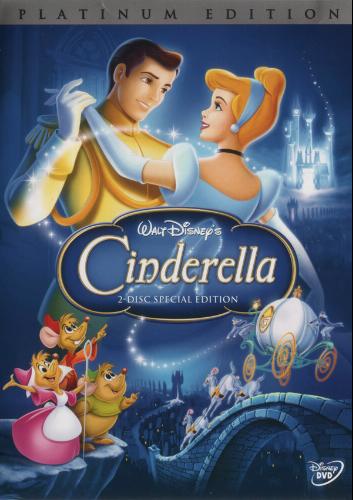
Our last entry is about the one you probably know the
best—the Disney animated film from 1950. It was clearly based on the version by Charles
Perrault as it contains a fairy godmother, a pumpkin into a coach, a
midnight curfew and lost and found glass slipper.
If I am honest, I was never a fan of this even as a
child. Perhaps because I preferred my fairy tales with my blood and guts (no
stepsister tries to slice off her toes or heel to fit into the shoe in this
version), but perhaps because I felt that our protagonist was too passive for
my liking. Those would not have been the words I would have used as a child,
but it how I felt. At home she seemed so resigned to her situation. I was
worried that she had no fight in her. She took abuse and just lived in a
daydream. I wanted to see her say “I’m mad as heck and I’m not taking it
anymore!” I realise now that it was not very easy for a single woman at this
period in history (I mean the olden times when Perrault wrote it, but it could
also apply to the 1950s) to do something without a man to support her. As a
child I just really wanted her to have more spunk. In Variety’s review of the film, they describe Cinderella
as being on the “colorless, doll-faced side.” I would agree with that
description.
I was also really upset by the fact that she was willowy,
graceful and blonde and he fell in love with her at first sightjust based on her appearance. He doesn’t even
talk to her (there is no time after the dancing and the chimes of midnight) he
just sees her and wants her. She’s the same. For her it is “Met a hot guy,
danced with him, let’s get married.” I wanted more adventure out of my life. However, I
think what really bothered me the most was the thought that I would never be a tall,
graceful or blonde. I am like an elf crossed with a hobbit and no prince was
going to fall in love in me at first sight without talking to me because my
personality is where I shine.
There are so many things I could say about this film,
but this Honest Trailers says it better than I could so I will let them do
the talking.
And just as a bonus, this clip from Saturday Night
Live. I loved the scenes of the mice sewing her a dress. I really wanted mice
to sew my clothes for me, but this sketch is how it actually would have happened.
That’s all for Cinderella. Thank you for joining me on
this journey. Stay tuned for April when we begin to explore other fairy tales.
Hello and welcome to Fairy Tale Friday. Are you
sitting comfortably? Good. Then I’ll begin.
This week we look at the Disney version of Cinderella.
It would make sense chronologically to do the animated film first, but I want to
save it until last and so I will be discussing the live action today.
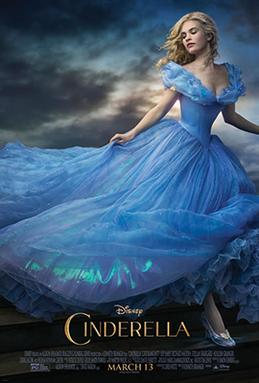
I remember when this film came out in 2015. It was
directed by Kenneth Branagh and featured some impressive names-- Lily James as
our heroine, Cate Blanchett as the Stepmother, Derek Jacobi as the old king,
Richard Madden as the prince and Helena Bonham Carter as the fairy godmother. I
recall reading an article at the time about how Lily James had to eat a liquid
diet to fit into her dress and how impossibly tiny her waist looked in the trailer.
It seems that she did not need the liquid diet to fit into the dress, but once corseted
could not eat solid food which if I am honest, is not much better. Branagh
attributes her tiny waist in the dress to her naturally slim waist, but I still
have visions of her internal organs being displaced while she sipped clear
broth through a straw.
I was pleasantly surprised by the film. The costume
design (despite the agonisingly tight corset on Lily James) was impressive. The film received a
nomination at the 88th Academy Awards, 21st Critics' Choice Awards and 69th British Academy Film Awards,
all for costume design. I can see why. The choice was made not to have
Cinderella in a dress with a ragged hem and contrasting patches but to be in a dress that had
once been new and beautiful and had faded over time. There were also so
inspired choices for the stepsisters played to perfection by Sophie McShera and
Holliday Grainger as silly, talentless (but vain enough to believe they were
genuine prodigies) who were constantly squabbling and disappointing their very
cool (in every sense of the word) mother. Their costumes mimicked the clothing
of the day bit with just an edge of wrongness—colours a little too bright, just
a few too many shiny sequins, slightly too fussy. Cate Blanchett looked like
she should have been in a 1940s film with her Veronica Lake wavy hair and icy flint
like demeanour. The dress for Cinderella at the ball was made with layers of
blue and purple gauzy silk which succeeds in giving her a look like a watercolour
painting in motion. It was not just the women’s costumes with their extreme
corsetry that were difficult to wear. I read that the prince’s trousers were so
tight they kept showing an unsightly bulge that was unsuitable for a family
film. They kept giving him tighter and tighter jock straps to press down the
bulge—so tight that it made him nearly cry. But enough about the costumes.
If there was one thing I could say about this film
that sets it apart from other versions it is this. This is the film of
backstories. We see WHY characters are the way that they are. Cinderella is
shown to have a happy “modest” upbringing with parents who love each other. Her
parents teach her to revel in nature and look after animals. On her deathbed,
her mother urges Ella to “have courage and be kind” which becomes her lifelong
motto.
Later when she meets Prince Kit in the woods while he is hunting a stag,
she is angered by him hunting a defenceless creature. He replies “But we're
hunting, you see. It's what's done.” She retorts, “Just because it's what's done, doesn't mean
it's what's should be done.” He later takes on this philosophy himself having seen
her kindness and wisdom. When they meet he claims to be an apprentice (well, he
is a prince in training) and she says she is a servant. When he asks if they treat
her kindly she replies that they treat her as well as they are able.
We also see backstory of the Stepmother. She does seem
cold, but it could just be self- protection. As we have discussed with this
story, there was not much a woman could do in this time when this story was
written to better herself than marry well. The Stepmother was married before to
a successful merchant. She is widowed. She has no means of her own as women
cannot own property or run a business. She has two unmarried daughters and mounting
debts. She remarries to keep a roof over her head and to have enough dowry for
her two disappointing daughters. She is continually reminded that her husband
loved and treasured someone before her and has a beautiful, accomplished kind
daughter to prove it. She sees his warmth with Ella, and it reminds her of
everything she has lost. Even though she went into the marriage as a business arrangement
that has to hurt. Then Ella’s father dies, and she is saddled with a second man’s
debt. She must harden herself like flint if she is to survive.
She makes a
speech to Ella late in the film after she has found the glass slipper about how
her own happiness has been crushed. She says:
Very well, I shall tell you a story. Once
upon a time, there was a *beautiful* young girl who married for love. And she
had two loving daughters. All was well. But, one day, her husband, the light of
her life, died. The next time, she married for the sake of her daughters. But
that man, too, was taken from her. And she was doomed to look every day upon
his beloved child. She had hoped to marry off one of her beautiful, stupid
daughters to the prince. But his head was turned by a girl with glass slippers.
And so, I lived unhappily ever after. My story would appear to be ended.
The fairy godmother deserves a paragraph to herself despite her tiny screen time. Helena Bonham Carter does what she does best---ham it up with glee. She gets ten minutes of film time but gets top billing and it is no wonder. We first see her doing the standard Cinderella test where our heroine has to prove her worth by being kind to a helpless old lady in disguise (HBC in full age makeup.) Then she transforms herself into a slightly dippy (possibly tipsy?) fairy godmother who says things like "I'm your hairy dogfather!"
Overall, I think it a decent adaptation of the Charles Perrault version with additional backstory. Stay tuned for the final version of Cinderella you have all been waiting for--the animated Disney version.
Hello and welcome to Fairy Tale Friday. Are you sitting
comfortably? Good. Then I’ll begin.
This week we look at a 1978 made for television film
of Cinderella entitled Cindy that features an entirely African-American cast.
It was directed by William A. Graham, and is an urbanised retelling of Cinderella set in
Harlem after World war II.
It boasts an exceptional cast with Nell Carter (known
for the sitcom Gimme a Break and so much more) and Alaina Reed Hall (who played
Gordon’s younger sister Olivia on Sesame Street for many years) as the spoiled
stepsisters. The title character of Cindy played by Charlayne Woodard was a marvellous
wide-eyed character full of childlike joy and wonder. I kept thinking she looked
familiar. She was Tituba in that fairly dreadful adaptation of The Crucible
with Daniel Day Lewis and Winona Ryder, but she was terrific in both the film Unbreakable
and Glass as the mother of Elijah.
Interestingly, both Charlayne Woodard and Nell Carter
were in the musical Ain’t Misbehavin’ on Broadway. Both were nominated for a
Tony as Best featured Actress in a musical, but the award went to Nell Carter.
I watched this film today (hence why this post is so
late going out) and I really enjoyed it. The musical numbers were good albeit a
bit strange. There is this New Orleans style jazz band that just pops up
everywhere like through their apartment window or out of a cubicle in the hotel
men’s room. But if you suspend your disbelief and just go with it, it is a very
enjoyable ride. I also laughed out loud with a snort several times.
There was no handy summary of the film to fall back on
so I have taken notes throughout the film.
After the war Cindy has moved from the south to live in Harlem with
her newly blended family. Her father has married a woman with two
grown daughters and has neglected to tell her that not only was he married before,
but he also has a grown daughter whom he would like to live with them. He also
makes the mistake of saying, “She makes your two daughters look like dog meat” which
clearly doesn’t help his case.
The stepmother
is not pleased and says if she’d have known she wouldn’t have married him, and
he replies that is precisely why he didn’t tell her. She says that even though he has a good job as
a hotel doorman at the Plaza, it is not enough to feed another mouth. I liked
this because often we see a father allowing his daughter to be neglected and
abused and you don’t know why. Here you see how henpecked he is with his hat in
hand shuffling nervously. There is a very good reason for him to be nervous which
we will discuss in a bit.
Cindy is seen jumping rope with some neighbourhood
children on the street in a white pinafore dress and shabby worn out white Keds
shoes. She has a childlike exuberance that makes her seem like a good person. We
see them in various day to day scenes where the stepmother and sisters are
abusive, and the father won’t stand up to his domineering wife.
There is a hilarious scene in church. The father warns
her they are not in the south anymore. This is no Baptist church but an
Episcopal one. He tells her that she can’t look like she enjoys it so much and should
only amen if they ask you to. But as the hymn is sung slow and dreary, she gets
the Holy Spirit and can’t hold it in any longer. She sings and dances up and
down the aisle and gets the church to join in with some soul but it puts her in
the doghouse with her stepmother.
There is a dance called the Sugarhill Ball coming up
and she really wants to go. She is out on the fire escape singing and cleaning
the ironwork when she meets Michael who is sleeping on the fire escape of the
next building(it’s wartime and there is a housing shortage). He is a draft
dodger who works as a chauffeur to the biggest blackmarketeer in Harlem. He
explains that he is happy being a coward because cowards don’t fight or start
wars.
The stepmother has made new dresses for her spoiled
daughters (who are seen to repeatedly play tricks on the stepfather) but she refuses to
make a dress for Cindy. Her father vows to go out and make enough money to
buy her a dress for the ball that night. She thinks he can do it as he is the
doorman of the Plaza hotel. But in reality, he is the men’s room attendant who
dreams of a better career and a fancy red jacket with gold braid on it. He
works hard all day with no break trying to get lots of quarter tips to have
enough money to buy his daughter a dress.
Back at the house the stepmother and sisters are
getting ready for the dance. Cindy wasn’t able to “pad both their brassieres”
because they only had one box of Kleenex and she casually remarks she can’t wait to
be fat enough to wear a girdle which makes them mad. She asks about what the
Sugarhill Ball will be like and they break into song with the jazz band coming
in through the window from the fire escape. This is an amazing number full of
scat and fast wordplay.
The father returns home dejected because he didn’t
earn enough money to buy her a dress. Cindy bears it bravely while her sisters
laugh. The father refuses to go to the ball without Cindy and decides to stay home
and get drunk.
Michael (acting as magical helper here)shows up in his chauffeur's uniform which looks
like a military uniform and invites her to the ball. He presents her with a
beautiful dress. She says her mama always told her to never accept expensive
gifts from men, but he replies that he stole it. She is outraged shouting, “What’s
wrong wichoo?” But he explains it belongs to his boss’s wife and he just
borrowed it for a few hours. His boss and his wife will be home at 12:30 so they
have to get the dress back by midnight. She changes clothes in the back of his
car and he acts like a gentleman by handing his hat on the rear view mirror so
he won’t see her undressed.
The party is a hopping one and there are some funny
antics with one of the stepsisters Kleenex coming out of her bra and her
pretending to dab sweat off her brow to cover up her stuffing coming out.
Decorated war vet marine captain Joe Prince takes the
stage as Cindy arrives. We see her lift her dress to climb the stairs and we realise
she still has her white bobby socks and raggedy Keds sneakers underneath. Joe
Prince makes his way around the room dancing with all the ladies, but really
takes a shine to Cindy. He takes his distinguished service cross and tries to
give it to her, but she refuses. At midnight she runs away leaving her dirty sneaker
behind. Michael is afraid they won’t make it back in time and he will get fired,
but they make it back safely.
Joe Prince employs a Private Investigator to find out
who the sneaker belongs to. He visits every woman in Harlem to have every woman
try it on which leads to a hilarious montage of trying on the sneaker. One of the
stepsisters tries to use Vaseline to slide her foot in and the other rolls off the
chair trying to jam her foot into it. Outside their house the PI runs into
Michael who recognises the sneaker but is reluctant to give away Cindy’s
details. The PI says that Joe Price is a fine upstanding soldier that“The Japanese
think it is an honour to be killed by him,” but Michael feels he is equally
worthy for her despite being poorer and a draft dodger.
We then see the stepmother take a taxi to the Plaza Hotel
where she is shocked to find out that her husband has lied about his job. She
storms into the men’s room to give him what for and he responds by standing up
for himself in a jazzy song about he may only be a men’s room attendant, but he
is the best one out there. Then the jazz band saunters out of a bathroom stall
while white men pop up and sing over their cubicle doors.
They go home and find out that the rich Joe Prince
wants to marry Cindy and then sugar wouldn’t melt in their mouths. Cindy goes
out on the fire escape and finds out that Michael was fired for borrowing the
dress and he is now enlisting. Joe Prince joins them on the fire escape and
remarks “Why what a beautiful view. You can see all the way to the end of the
alley.” Then he says something so bizarre—“I don’t really have a way with words
as I am just a common leatherneck. But there is no one I would be prouder to
have as my widow than you.” She asks to think it over and he says that there is
no time for deliberation as he has a photographer waiting. He starts singing at
her about how she shouldn’t say no (with the jazz band shown on the fire escape
above), but she climbs down the fire escape and tracks down Michael who is at
the recruitment office.
She finds him there and professes her love saying, “I’d
rather starve with you than live in a palace with that captain.” The military
man turns on a portable fan so the flag will wave while the jazz band just
casually walks in on the swearing in ceremony and nobody seems to notice.
Michael is sworn into the military and they vow to write six letters a day and
they leave—him to go to basic training and her skipping away with him to see
him off at the train station and then presumably to go home and have to face
her family. I worried greatly at this point that her greedy, selfish family
(which includes her father) would be horrible to her for turning down a rich
offer for a true love match, but a Military Policeman comes out of the building
and assures me that everyone (and I mean EVERYONE he barks) lived happily ever after.
It ends with an epilogue where you see what happened to
everyone:
Cindy’s father finally gets promoted to doorman and
gets to wear a red coat with shiny gold trim.
The stepsisters became famous as tag-team women’s
wrestlers.
The detective ended up opening a shoe store and got to
put shoes on pretty women’s feet forever.
Joe Prince spent the years after the war posing for
recruiting statues.
The stepmother became a happy step-grandmother when
Michael and Cindy had a baby girl.
Michael was the happiest of all—he got the girl.
It ends with Cindy singing about how she got
everything she wanted—to be loved.
This film is well worth watching. You can watch it here:
Stay tuned for the last two weeks of Fairy Tale Friday
Cinderella as we look the Disney versions.
Hello and welcome to Fairy Tale Friday. Are you
sitting comfortably? Good. Then I’ll begin.
This week we look at a 1960 comedy film starring Jerry
Lewis entitled Cinderfella. I will be the first to admit I am not a fan
of Jerry Lewis and his gurning schtick, but this had some charming moments. Ed Wynn plays his Fairy Godfather in that daft other-worldly way that only he can. Has anyone ever seen a film where Ed Wynn was anything but weird?
This is a role reversal story starring Lewis as Fella
that features most of the hallmarks of a traditional Cinderella tale.
Wikipedia summarises it like this:
When Fella's father dies, he continues to live with his wicked stepmother, Emily, and her two sons, Maximilian and Rupert. His stepfamily takes over the
family mansion, while Fella is reduced to living in an unfinished room at the
end of a long hallway. He has in essence become their butler, catering to their
every whim.
Note: This scene shows Fella as a slightly awkward, possibly dyspraxic, earnest fellow who tries but fails to light his stepbrother's cigarette.
Fella dreams nightly that his father is
trying to relay a message to him about where he has hidden his fortune, but he
always awakens before he learns the hiding place. His stepfamily knows of this
secret fortune and some go to great lengths to discover its whereabouts, while
others pretend to befriend him in order to wrangle Fella's fortune away once it
is found.
Princess Charming of the Grand Duchy
of Morovia is in town, so the stepmother decides to throw her a lavish ball in
order to get her to marry one of the sons. Fella is not allowed to go to the
ball, but his fairy godfather says he will not remain a "people" much
longer, but will blossom into a "person." His fairy godfather also
says that Fella will bring right to the men and will make wives stop looking
for their Prince Charming because there was only one.
Note: Here we have Ed Wynn doing his trademark squeaky voice and quirky personality. it also shows, like in other versions, that our protagonist is humble and kind.
Before the ball, Fella is turned into a
handsome prince. Count
Basie's orchestra is playing at the ball when Fella makes his grand
entrance. The young man quickly gains the attention of the Princess and they
dance.
Note: Here we see a very loose-limbed Jerry Lewis do a floppy sort of dance to Count Basie's Orchestra which attracts the attention of the princess.
The night is cut short when midnight strikes and Fella flees, losing his
shoe along the way.
Note: This energentic dash up the stairs like a rocket actually gave Jerry Lewis a heart attack.
Wikipedia reports:
The scene was shot with one take of Jerry Lewis going
down the stairs and one take going up. He ran up the stairs in less than nine
seconds and collapsed at the top. He was taken to the hospital and spent four
days in an oxygen tent with his second cardiac event. This delayed filming for
two weeks.
Back to the story:
Back home, one of Fella's stepbrothers
realizes that Fella is the supposed "prince." They wind up in a
struggle under a tree, in the process discovering that this is where Fella's
father's fortune is hidden. Fella gives the money to his stepfamily, saying he
never needed money to be happy, he only wanted a family. Shamed, his stepmother
orders her sons to return the money to Fella.
The Princess arrives with Fella's lost
shoe, but Fella explains that they could never be together because she is a
"person" and he is a "people." She tells him that,
underneath the fancy clothes, she is a "people" too.
Note: Sadly, I cannot find a separate clip for this, but you can watch the whole film in the link below. The scene in question where they meet and talk about her being people too starts at 1:08. Interestingly, she is dressed in a lavish red dress with long sleeves, fur trim and high heels. As they start to argue where he says he is ordinary and she is special, she rips her clothes--pulling off her sleeves and fur trim, breaking the heels off her shoes to make them flats (it doesn't really work that way, but still) until she is wearing an ordinary red dress.
I think the one interesting thing to take away from this is that rarely do we see Cinderella have an inferiority complex about the fact that she is not good enough for the prince like we see here. He has real doubts but she makes a speech much like the one at the end of Notting Hill about being a girl standing in front of boy trying to get him to love her and it works.
That's all for this week. Stay tuned next week for a tale with more colour.
Hello and welcome to Fairy Tale Friday. Are you
sitting comfortably? Good. Then I’ll begin.
This week we look at an animated film by Fleischer
Studios starring Betty Boop. It was founded in 1921 by
brothers Max Fleischer and Dave
Fleischer who ran the company until it was bought by Paramount Pictures. Fleischer Studios was the chief
competitor of Walt Disney Productions in the 1930's.
Fleischer Studios characters included Koko
the Clown, Betty Boop, Bimbo, Popeye the Sailor, and Superman. While other studios used anthropomorphic
animals, the Fleischers used mostly humans as their main characters.
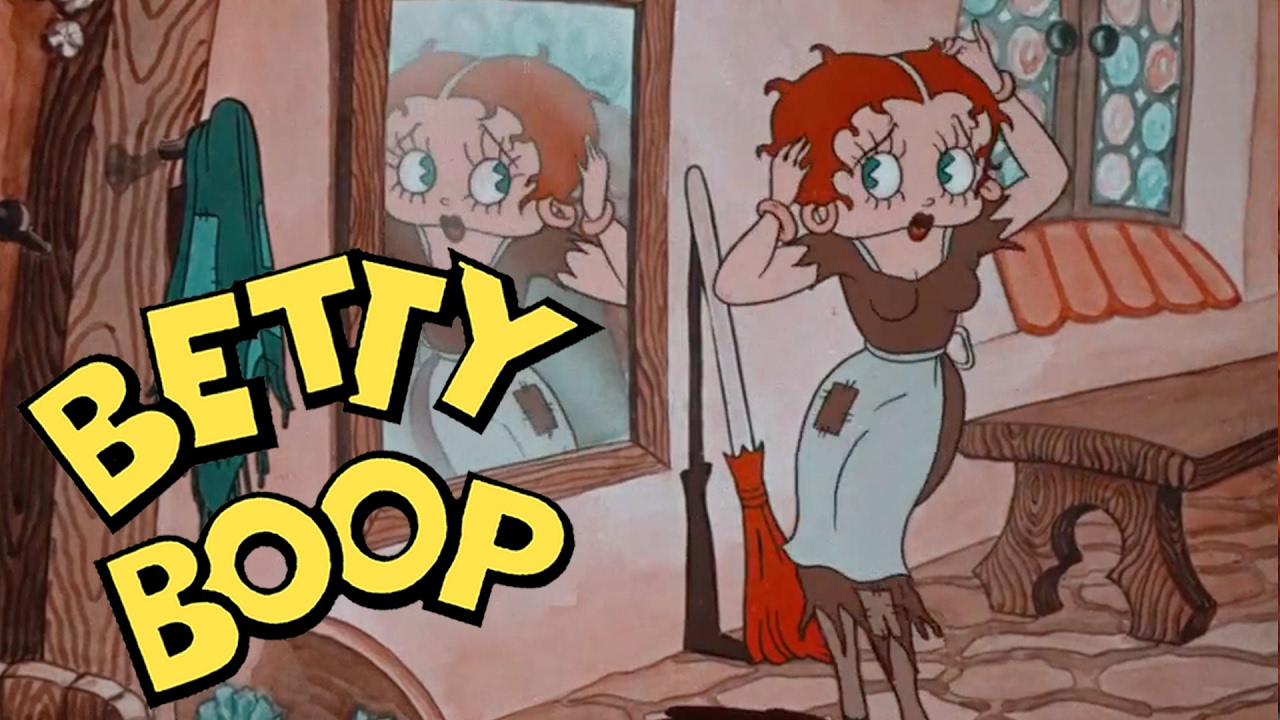
This animated short film starring Betty Boop was made
in 1934 and was the first colour film by the Fleischer Brothers.
It is interesting to note that having only seen Betty
Boop in black and white, I was surprised to see that they have made her a redhead.
According to Wikipedia:
Cinderella (portrayed
by Betty Boop) is a poor young woman forced to be the virtual slave of her two
ugly stepsisters, who demand she prepare them for the prince's ball while she
is left at home to lament her spinsterdom, singing that no one loves her and that
her only respite is her dreams, but she holds out hope of being a real princess
someday.
NOTE: She has a brief creepy dance with a
broom that reminded me of the walking brooms from The Sorcerer’s Apprentice.
The stepsisters are made ugly by large flat feet and rubbery arms with wide
shoulders and flat chests. Cinderella
may be wearing rags with patches, but she also manages to do all her work in
high heels. There is a great visual montage of Cinderella inside a clock with
Roman numerals doing all the cleaning to show the passage of time.
Cinderella
is visited by her fairy godmother, who grants her wish to attend the prince's
ball, giving her beautiful clothes, a carriage, and the traditional glass
slippers, with the warning that she must leave by midnight before the spell
expires.
Note: Her fairy
godmother appears from a sputtering candle flame. She also magics a lace
handkerchief so Cinderella can blow her nose. She asks for a pumpkin, six mice
and two lizards who then dance around the drawing room singing with creepily
human teeth. Even the pumpkin is glad to be part of the transformation to our
help our kind protagonist and a jack-o-lantern face appears and sings in a bass
voice that he narrowly escaped being pumpkin pie. The fairy godmother waves her
wand and Cinderella’s ragged dress gets shorter and shorter until it disappears.
She is left in her ruffled pantaloons which also disappear making this rather
racy as she stands in tiny cartoon frilly knickers. A garter and corset
magically appear as well as a beautiful dress.
During the ball, Prince
Charming, provoked by a mallet-wielding Cupid, descends the
staircase in royal fashion and is instantly smitten by Cinderella.
NOTE:
After being brained with a mallet, he slides down the stairs to the tune of
a swanee whistle. Also, everyone else appears to be cardboard cutouts in the
background. I know that this is an animation time saving technique, but it sort
of gives the effect that they feel like they are the only two people in the
room. Then a caricature of Rudy Vallee serenades them.
The two have a wonderful time dancing
together, but when midnight strikes, she rushes out of the ball, leaving behind
her shoe.
NOTE: The ballroom must be on the top floor of
the palace as she has to descend several flights of stairs to get out the door.
She runs into a mirror she thinks is a hallway then slides down the banister to
get out.
The prince proclaims that whoever can fit
her foot into the shoe shall be his wife; all the maidens in the land line up
to try, with none in the queue able to fit until Cinderella arrives and fits
into the shoe easily.
NOTE: It
is interesting to note that everyone else seems like they are in a different
historical period than she is. They all have big powered white wigs and she has
flapper hair and a shorter dress.
Also the way they try on the shoe is unusual.
Instead of the shoe being put on the stationary foot, the shoe remains on a
pillow and an assembly line of women try their foot in the stationary shoe.
The two are married, and the ugly
stepsisters are left to argue with each other until the end title's doors smack
their heads together.
NOTE: In
the wedding carriage, the prince is *definitely* wearing blue eyeshadow and
mascara.
This is an interesting film that is slightly risqué with
the near nudity of Betty Boop. Watch it here:
That’s all for this week. Stay tuned next week for a
comic reversal.
Hello and welcome to Fairy Tale Friday. Are you
sitting comfortably? Good. Then I’ll begin.
This week we look at an early animated film version of
Cinderella. It was produced by the Laugh-O-Gram Studio which played an
important role in early animation. It was started by none other than Walt
Disney himself and many of the early pioneers of animation got there start
there. In 1921, Walt Disney contracted Milton Feld to animated twelve cartoons.
Of the twelve, seven were retellings of fairy tales. Of the original seven
fairy tales only four survive--Little Red Riding Hood (1922), The Four Musicians of Bremen (1922), Puss in Boots (1922) and Cinderella (1922).
This film bears all the hallmarks of early cartoons—bouncy
animation and flickery camera work. It tells an interesting story. It also contains some helpful speech bubbles as well as title cards to help you
understand the upcoming scene.
Cinderella has but one friend, her cat, who is seen in
the opening shot helping her dry the dishes which in my opinion is unhygienic.
She lives with her lazy, homely stepsisters who are seen slobbing about,
reading magazines and eating bonbons.
Then we see the prince whom the caption describes as a
wonderful fellow. Which he is not because he is seen on horseback with a rifle chasing a bear and shooting it in the butt repeatedly. Then it gets even more bizarre.
We happen upon what can only be described as a bear jamboree where bears play
jazz and do the Charleston. All the bears are having a
whale of a good time until the prince arrives. He chases them into a cave where
he massacres every bear at the party which I think is meant to be funny, but
just made me angry. A wonderful fellow, my
ass.
Then we see an invitation to the ball bearing the
curious date of “Tuesday, Friday the 13th.” The prince has his dog
deliver all the invitations on a scooter (seriously, I am not making this up.) The dog gets into a wreck (dogs should not be
allowed to drive a scooter!) and is seen all bandaged up with a crutch. Some
well-meaning idiot asks, “Are you hurt?” to which the dog rolls his eyes and
smacks the man over the head with the crutch. Now that was funny.
The fairy godmother changes her gown into a typical
flapper outfit (it is the 1920’s after all) and gives her a snazzy Model T
motor car to go in as a carriage. Her cat is the driver of the car (what is it
about this film that lets pets dive vehicles?) They arrive at the ball and it
is love at first sight not only for her and the prince but for the cat and the
dog. Together each couple cuts a rug until the dreaded midnight curfew. Interestingly,
the clock shows you 10:00, 11:00 and midnight which is helpful to see the
passage of time. Most stories seem to have her arrive, have one dance to fall
in love and then it is time to high-tail it out of there.
She runs away and loses a shoe and then it gets weird.
The next day the prince follows what he thinks are her footprints. He and the
dog crawl along the street looking at the shoe prints with a magnifying glass,
but alas! It is not her footprints, but rather a surly ducky wearing shoes. I
told you it got weird.
We see the two stepsisters and Cinderella sitting
outside under a tree when the prince and his dog approach. Her cat immediately pulls
the dog behind the tree to make out while the prince tries the shoe on
everyone. After the second sister tries it on, he turns around and exclaims, “Ah!
You!” and everyone (the cat and the dog, the prince and the Cindergirl) live
happily ever after.
You can watch it here:
That’s all for this week. Stay tuned next week for a
Betty Boop Cinderella.
Hello and welcome to Fairy Tale Friday. Are you
sitting comfortably? Good. Then I’ll begin.
We have been looking at silent films for the past few
weeks. Several have had impressive effects for their times, but also some
stylised overacting (which I suppose you have to do if you have to mime everything.)
This week we look at a feature length silent film made in 1914 and starring “America’s
Sweetheart” Mary Pickford. Her acting is really quite good for a silent
film and it is no wonder. She was a feminist pioneer actress and businesswoman.
Wikipedia tells us:
With a career spanning 50 years, she was a
co-founder of both the Pickford–Fairbanks Studio (along
with Douglas Fairbanks) and, later, the United
Artists film studio (with Fairbanks, Charlie
Chaplin and D. W. Griffith), and one of the original 36 founders
of the Academy of Motion Picture
Arts and Sciences who present the yearly "Oscar" award
ceremony.
Who knew?
Pickford was one of the earliest stars to
be billed under her own name and was one of the most popular actresses of the
1910s and 1920s, earning the nickname "Queen of the Movies". She is
credited as having defined the ingénue archetype
in cinema.
She was awarded the second ever Academy Award for Best Actress for
her first sound-film role in Coquette (1929)
and also received an honorary Academy Award in 1976. In
consideration of her contributions to American
cinema, the American Film Institute ranked
Pickford as 24th in its 1999 list of greatest female stars of classic Hollywood Cinema.
You go, girl!
My overall opinion is that the acting is much better and
more subtle than the other films, but the effects are rather same-y. It does however have helpful title cards to help you understand what the upcoming scene will be about.
Because
this is a long film I will use Wikipedia again to help me summarise.
Cinderella is a kind young woman who lives
with her wicked stepmother and ugly stepsisters. They abuse her and use her as
the housemaid. One day Cinderella's stepmother and stepsisters refuse to help a
beggar at their door, but Cinderella offers her food and drink. The beggar
woman is revealed to be a beautiful fairy in disguise, who then secretly helps
Cinderella for her kindness. One day when Cinderella is sent to gather
firewood, her fairy godmother summons a troupe of fairies who secretly gather a
bundle of wood for her. Cinderella meets Prince Charming who is walking in the
woods, and each is smitten with the other in their short encounter.
NOTE:
This is typical of Cinderella tales where her kindness must be tested to see if
she is worthy of magical help. Also the meeting in the woods and falling in
love is exactly how it happens in the pantomime version of Cinderella.
Soon, a ball is arranged so the prince may
choose his future wife. The sisters visit a witch-like fortune teller in the
woods, who predicts that a member of their family will be chosen by the prince.
The sisters are delighted, thinking it will be one of them.
That night, the stepsisters have nightmares
of the old fortune teller, while Cinderella has pleasant dreams of fairies
dancing.
NOTE: This reminds me a
bit of Macbeth where the witches tell him no man born of woman can defeat him
and he totally doesn’t think there might be any other possibility and styles
himself as invincible. And why are there always dancing fairies in a silent
film? I wonder if this is all silent films or just fairy tales?
When the stepsisters leave for the ball,
Cinderella is left behind. The fairy godmother appears asks Cinderella to bring
her a pumpkin, some mice, and some rats. The fairy transforms the pumpkin into
a coach, the mice into horses, and the rats into grooms and footmen. Finally,
she changes Cinderella's ragged dress into a gown fit for a princess (with
glass slippers, of course). She tells Cinderella she will to be back at home
before the clock strikes midnight, for then, her fine dress will turn into rags
and the coach and servants will become what they were before.
NOTE: Here we have all
the elements we expect from a Charles Perrault version—pumpkin, mice, rats,
glass slippers and midnight curfew.
The unknown lady who arrives at the ball
charms the guests, and especially the prince. He and Cinderella slip away to
the garden. Their flirtations are interrupted by the clock striking midnight.
Cinderella rushes away, losing one of her slippers, and she arrives home, a
ragged cinder girl once more.
Cinderella tosses on her bed, suffering a
surrealistic dream in which evil-looking dwarves ring the midnight bell and the
numbers on the clock's face dance and scramble wildly. She is awakened by the
arrival of her step-family, who kick her out of bed and set her to her daily
drudgery again.
NOTE: This motif of
being tormented by clocks was also featured in the 1899 version.
Later, heralds announce the Prince's wish
to marry the woman whose foot fits the lost shoe. The sisters go to the palace,
and a comic scene ensues as each tries to force her too-large foot into the
dainty slipper. The Prince learns that every girl in the kingdom save one has
tried the slipper on and failed the test and announces that he will bring her
to the palace himself. Finding Cinderella, he escorts her to the palace, where
the slipper fits her. Her beautiful raiment is magically restored, and all bow
to the future princess. Although a courtier suggests that this is an excellent
opportunity for Cinderella to have her stepmother and stepsisters beheaded, she
forgives them all.
NOTE: Cinderella is always
nicer than I am. Off with their heads!
The prince and Cinderella again sneak away
to the garden. When midnight strikes, Cinderella panics and starts to run away
again, but her fairy godmother reappears and blesses her, assuring her that a
good and noble spirit is always rewarded.
NOTE: I quite liked this
happy ending. Cinderella will not be able to sabotage her own happiness by
running away and her virtue is rewarded. Sadly, virtue should be its own reward
because you can be a good person and bad things still happen but, in this case,,
we get a fairy tale ending.
You can watch it here. I feel the film below has
better quality (less blurry) but it only goes until she leaves for the ball.
Here is the whole film of slightly less good quality (title cards also dubbed into what I think is Spanish)but shows you all the way to the end of the film.
That’s all for this week. Stay tuned next week for the
Laugh o Gram version.
Hello and welcome to Fairy Tale Friday. Are you
sitting comfortably? Good. Then I’ll begin.
This week we look at a silent film made in 1907. It
was directed by Albert Capellani who was a French film director and
screenwriter of the silent era. He had a theatrical background and often cast
stage actor colleagues for his films. Capellani's films cover many genres,
including melodramas, fairy tales, costume
dramas with historical and biblical themes, and literary adaptations including adaptations of
Beauty and the Beast as well as The Hunchback of Notre Dame and Les Misérables.
It starsLouise Lagrangein the title role. Lagrange was a French actress of the silent screen who starred opposite Valentino. I personally do not think much of her silent acting skills, but perhaps I am not wise to the subtleties of the silent film era.
This film is 14 minutes long and there are some
surprisingly good effects in it, but a few “what the heck is going on” moments.
Perhaps that was indicative of all silent films, I don’t know. Perhaps if you
had never seen talkies you would be able to follow the plots better.
This film has useful title cards which set the scene. We
begin with The Invitation to the Ball. We see our heroine weeping as she is
chastised by her stepmother and stepsisters. She does a lot of weeping, which
is really just putting her face in her hands and shaking her head to give you
the impression of sobbing, but as every good crybaby knows—sobs come from your
shoulders. A man enters the room and comforts her and wipe her tears. I
thought because he touched her on the face to wipe away her fake
tears was meant to be her father since he was so overly familiar, but I wasn't sure. I think he is. He opens the door and lets in a clumsy man from the palace who brings news of the ball. This becomes clear after
some wild gesticulating and a jig to indicate there will be dancing. The clumsy man from the palace seems to fall down in every room they go in. I presume this
is some sort of comic relief (because watching people fall down is funny.)
As you would expect, she isn’t allowed to go. She lays
her head on the table and pretends to cry when--and I really have no idea what
this is even after watching it five times—some sort of goblin appears out of a box
on the kitchen wall. My husband said “Is it meant to be a rat? Or a cat?” But
it definitely has a jester’s cap on and tries to repeatedly taunt or frighten
her throughout the film. I genuinely have no idea, so if you do please leave me
a comment. Then her fairy godmother appears and seems to chase away the goblin
acrobat. She summons a hoard of dancing girls (why are there always dancing
girls in togas in silent films?) who appear to weaving a giant fishing net (I
kid you not) which turns into a fancy gown for Cinderella. I suppose if you had
them weave a fancy gown with actual thread it wouldn’t show up on film.
They go into the lounge and the goblin does a somersault
and becomes a man in period clothes in a very good special effect. He then throws
two chair cushions on the floor which become footman. I presume he is meant to
be the driver of the coach, but then he spends a few minutes teaching our heroine
how to dance and bow and other things she might need to know when going to a
royal ball. A minute ago he was some sort of hobgoblin and now he teaches
deportment.
There is a big orange warning card to remind her to be
home by midnight followed by a fantastic
special effect of a pumpkin becoming a coach. Then she is whisked off to the
ball which turns out to be an outdoor affair. It is some sort of garden party
where is quite hard to tell who is who (these white period wigs make it very
hard to tell people apart.) While other people dance, she walks for ages in a circle with someone that I thought must be the prince but then after her long
walk she is introduced to someone (without a white period wig) and they dance
so HE must be the prince. Then cleverly, the musical accompaniment begins to
chime twelve times and she runs away leaving her shoe.
The escape was the strangest I had ever seen. She is
running down a road and is suddenly attacked by that inexplicable goblin (for
the love of God, please help me figure out what he is!) and then is seen to be exaggeratedly
limping with a whole search party twenty steps behind her. They catch up to her
and the prince seems to ask a “Have you seen a lovely maiden pass this way?”
sort of question which she violently shakes her head to say “No.” He doesn’t
recognise her in her rags, and she breathes a sigh of relief.
The next scene is the most extraordinary. She sobs
herself to sleep resting her head on the kitchen table. Then her fairy
godmother appears and with a wave of her wand the entire kitchen wall explodes
like a bomb went off. THE ENTIRE KITCHEN
WALL. She doesn’t wake up at all despite a huge chunk of masonry landing on
her leg. This leaves a handy hole to view
the palace and see them plotting to try the slipper on every available maiden.
Then--in an amazing trick of reversing the film footage—the wall flies back up
and puts itself back together like a jigsaw puzzle.
We then see them trying the slipper on every maiden in
the land, and I do mean every maiden--rich or poor. We see ladies sitting in Chippendale
style chairs in a garden (rich) and a lady with an apron chasing a huge flock
of chickens (poor.) They both are unsuccessful at getting the slipper to fit. They
go to her house and she takes off her wooden clogs and lo and behold –the slipper
fits. Suddenly he recognises her, and they get married in colour. That’s right
folks—the last few minutes of this early black and white film were hand
coloured in a sort of garish Easter egg colour scheme. And they lived happily
ever after.
You can watch it below:
That’s all for this week. Stay tuned next week for a
longer silent film starring Mary Pickford.
Hello and welcome to Fairy Tale Friday. Are you
sitting comfortably? Good. Then I’ll begin.
For the next few weeks we are going to look at silent
film versions of the classic tale of Cinderella. I will start with the oldest I
can find by Georges Méliès.
According to Wikipedia:
Méliès was a French illusionist and film director who
led many technical and narrative developments in the earliest days of cinema. Méliès was
well-known for the use of special
effects, popularizing such techniques as substitution splices, multiple
exposures, time-lapse photography, dissolves,
and hand-painted colour. He was also one of
the first filmmakers to use storyboards. His
films include A Trip to the Moon (1902) and The Impossible Voyage (1904), both
involving strange, surreal journeys somewhat in the style of Jules Verne,
and are considered among the most important early science fiction films, though their
approach is closer to fantasy.
He also experimented with “stag films.” His most famous of these risque films was After the Ball. "The film's
plot is a one-minute scene of a servant bathing a woman, along with the
scenarios before and after as the servant is helping her get undressed (down to
a bodystocking which simulates nudity) while revealing a few layers of
clothing, bathing her, and finally covering and drying her with a robe. This is
the earliest known film to show
simulated nudity." (again thanks to Wikipedia for that information.)
If you would like to watch it click{HERE}
This film of Cinderella was made in 1899 and features
several elements we recognise and a few that are really strange. It begins with Cinderella begging her
stepmother to go to the ball and then being refused. Her fairy godmother
appears, and our protagonist brings a crate of live animals who transform into larger
papier mache animals and then to footmen for her coach. Similarly a real pumpkin
is transformed into a giant fake one and then a carriage. Her fairy godmother
gestures sternly at the wall which I presume there hangs a clock, but it is
hard to see as this is in black and white and 121 years old. When Cinderella
leaves for the ball the godmother disappears down a trap door (much like the
effect that was used in the 1939 Wizard of Oz where the witch of the west
leaves Munchkinland.) We see Cinders and the prince at the ball dancing away to
some waltzy music (as opposed to the jaunty music at the start of the film)
when suddenly who should appear but Father Time with an enormous white beard
holding a huge clock showing it is midnight. He somersaults into a puff of
smoke and disappears. Her fairy godmother shows up and waggles her finger and
turns our heroine’s dress back to rags. The Father Time bit was weird but made
sense in the context of the showing it is midnight part of the story, but then
he reappears at her house with a bunch of dancing girls who all turn to giant
clocks and torment her. Then it goes back to be the tale we know—the slipper is
tried on and it ends with a wedding with some exuberant dancing by girls
outside the church who look suspiciously like they were the ones being clock
tormentors.
Watch the film here:
This film and its effects are amazing since it was
made in 1899. I have long been a fan of Georges Méliès so this was a delight to
find.
That’s all for this
week. Stay tuned next week for another look into the silent film industry and
Cinderella.
Hello and welcome to Fairy Tale Friday. Are you
sitting comfortably? Good. Then I’ll begin.
We have been looking at musical versions of Cinderella
(meaning versions from a musical) but this week I would like to look at a
musical version (meaning music from a song).
This version is by one of my favourite folk singers Emily
Portman from her award winning second album Hatchling.
According to her Bandcamp page:
Emily Portman is a singer, writer and
concertina player from Glastonbury and hailed as ‘one of the new British folk
scene’s most beguiling presences’ (Uncut). Emily is the 2013 holder of the
BBC Radio Two Folk Award for Best Original Song; an accolade which reflects her
power to conjure darkly surreal netherworlds where folklore and myth collide
with urban landscapes.
This song includes many elements from the oldest versions of our tale—the helpful animal to give her food or milk when she is being starved by her stepmother, the blood and pain and sacrifice that it takes to get to the ball and the grave of her mother being a helpful place. This is no wonder as Emily Portman has a master’s degree in folk music. But being Emily Portman she has made it dark and surreal. Almost grotesque in its beauty.
I find it interesting that the song mentions the little red calf whose milk will wash the soot and the scars away. It reminds me of The Rough Face Girl whose skin was scarred from the popping of the fire but was made as soft as silk after bathing in the lake.
In many tales the hazel tree was planted on her mother’s grave and she watered it with her tears. It is the tree imbued with the spirit of her mother that grants her wises for a dress and shoes. In this version, the white dove in the hazel tree pecks at her own breast covering our heroine with a torrent of blood that changes to a crimson gown. It’s like a fairy tale form of Stephen King’s Carrie but with a happy ending not the death of everyone at the prom. It also puts me in mind of the Louisiana flag where the pelican slashes her breast open feed her babies with her own blood. Everything we do involves sacrifice.
The last part reminds me of the test that our heroine often has to go through. Here she must be brave enough to actually step into the open grave of her mother. She must face the worms and her worst fears—she must see her true self. Then the grave will turn into a carriage and horses and take her away from this life that is no life. But in order to escape, she must face her own demons. Powerful stuff.
Here are the lyrics, that read like a poem. If you have read my book Wounds: New Openings Into Old Stories then you will definitely see the influence of this song on my writing.
Ash girl, ash girl with your coal black eyes Coal black eyes that have given up burning Go down, go down to your father's yard Help will be at hand
For the little red calf will give you milk To wash the soot and the scars away 'Til your skin is soft as silk Changed from its colour of ashen grey
Ash girl, ash girl with your mouth that's forgotten Your mouth that's forgotten about upturning Go down, go down to your hazel tree Help will be at hand
For the little white dove will peck at her breast 'Til the ruby blood in torrents runs down Down onto your waiting skin Then it will change to a crimson gown
Ash girl, ash girl with your feet that are tethered Your feet that are tethered with no hope of leaving Go down, go down to your mother's grave Help will be at hand
For the grave will open, inviting you in To feel the worms against your skin Don't let the fears pull you down For brave ones there's treasure to be found
Step into her grave and cut all your losses The worms will turn to rubies rare The grave will change to a carriage and horses Ready to take you the devil knows where.
Ash girl, ash girl with your coal black eyes Coal black eyes so brightly they're burning Remember the name your mother gave Before she let go of your hand
Remember your name and pull at the reins Your hour is calling, there's no time for stalling Remember your name and pull at the reins They'll follow the turn of your hand
Now the little red calf can sleep in the hay The little white dove can sleep in her nest The fire will sleep, they can tend it themselves And under the earth your mother can rest
If you would like to hear her singing, please go to the link below on her Bandcamp page: